
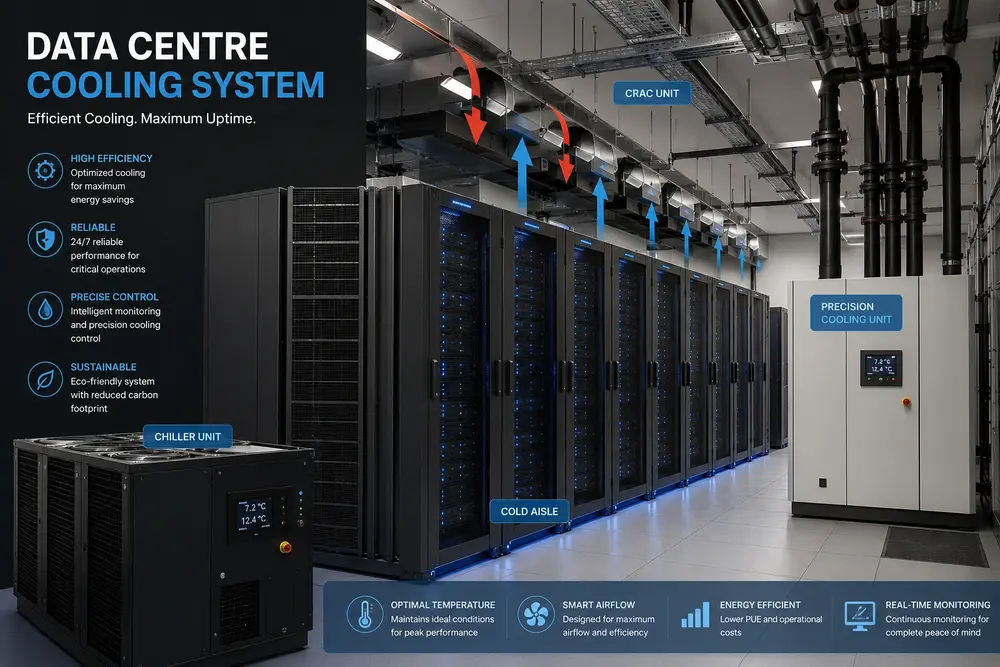
Data centres are running hotter than ever. As more facilities take on heavier computing workloads, keeping equipment at a safe temperature has become one of the biggest operational challenges. A reliable data centre cooling system is no longer just a support function, it is central to keeping servers running and protecting the investment behind them. This blog looks at why cooling matters more than ever and what to consider when planning your own setup, whether you manage an existing facility or are designing a new one from scratch.
Why Cooling Demands Are Rising
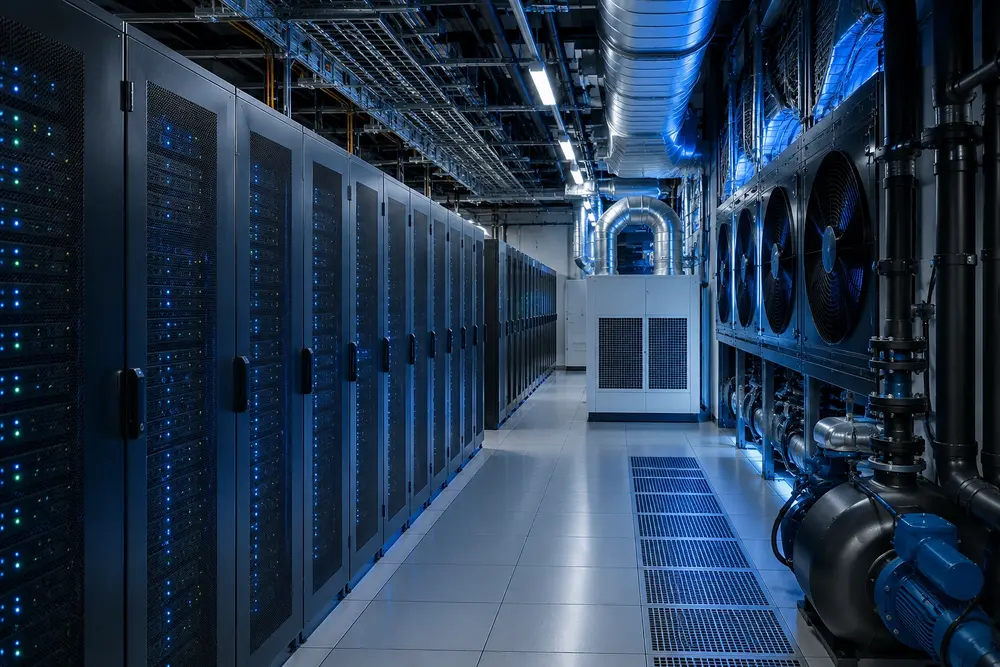
Modern computing hardware packs more processing power into smaller spaces than it used to. This means more heat is generated in the same footprint, and traditional cooling methods often struggle to keep up. Facilities running dense, high-performance workloads are finding that older room-based cooling approaches leave hot spots that can shorten equipment life and increase the risk of failure during peak usage periods. This shift has pushed many operators to rethink cooling strategies that once seemed more than adequate.
Types of Data Centre Cooling Systems
- Room-based cooling: Cools the entire space evenly, but can waste energy on areas that do not need it.
- In-row cooling: Places cooling units directly between server racks for faster, more targeted results.
- Precision cooling: Offers tighter temperature and humidity control for sensitive equipment.
- Liquid cooling: Moves heat away directly from high-density components, suited for the most demanding workloads.
Why Efficiency Matters More Than Ever
Cooling now accounts for a significant share of a data centre’s total energy use, which makes efficiency a real cost factor, not just a technical detail. Facilities that invest in smarter cooling design often see lower energy bills alongside better equipment reliability. This is pushing many operators to rethink outdated systems that were designed for lighter workloads than what they run today, and to plan upgrades before performance issues start affecting daily operations.
Choosing the Right System for Your Facility
Picking a data centre cooling system depends on your rack density, facility layout, and expected growth. A facility running standard workloads may do well with room-based or in-row cooling, while high-density setups often need precision or liquid cooling to keep pace with heat output. Working with an experienced provider helps you avoid underestimating your cooling needs as your equipment load grows over the coming years.
Signs Your Current Cooling Setup Needs an Upgrade
- Frequent hot spots near high-density racks
- Rising energy costs tied to cooling equipment
- Equipment running hotter than manufacturer recommendations
- Recent or planned expansion that increases your total heat load
Common Questions About Data Centre Cooling
How often should a cooling system be reviewed? Most facilities benefit from a review at least once a year, or sooner if workloads change significantly.
Can older facilities switch to newer cooling methods without a full rebuild? Often yes, many facilities add in-row or precision cooling units alongside existing systems rather than replacing everything at once.
Planning for Long-Term Reliability
A cooling system should be built with future growth in mind, not just today’s workload. Facilities that plan ahead avoid costly mid-cycle upgrades and reduce the risk of unplanned downtime as demand increases. Regular monitoring and maintenance also help catch small issues before they turn into major equipment failures that could take critical systems offline.
Balancing Performance and Sustainability
Cooling decisions today rarely come down to performance alone. Many facilities also face pressure to reduce their environmental footprint while still meeting strict uptime requirements. This has led more operators to explore designs that improve efficiency without sacrificing reliability, such as combining traditional cooling methods with newer, more targeted approaches. Facilities that balance these priorities well tend to see lower operating costs alongside stronger long-term performance.
Working With an Experienced Provider
Cooling system design is not something to leave to guesswork. An experienced provider can assess your current heat load, project future growth, and recommend a setup that avoids both overspending and underestimating your needs. This kind of guidance is especially valuable for facilities scaling up quickly, where cooling requirements can change faster than expected.
Preparing for the Next Phase of Growth
Facilities that treat cooling as an afterthought often pay for it later, whether through equipment failures, rising energy bills, or emergency upgrades under pressure. Building cooling capacity into your long-term facility plan, rather than reacting to problems as they appear, gives you far more control over both cost and reliability. This kind of forward planning is quickly becoming standard practice among facilities preparing for heavier computing workloads in the years ahead.
Conclusion
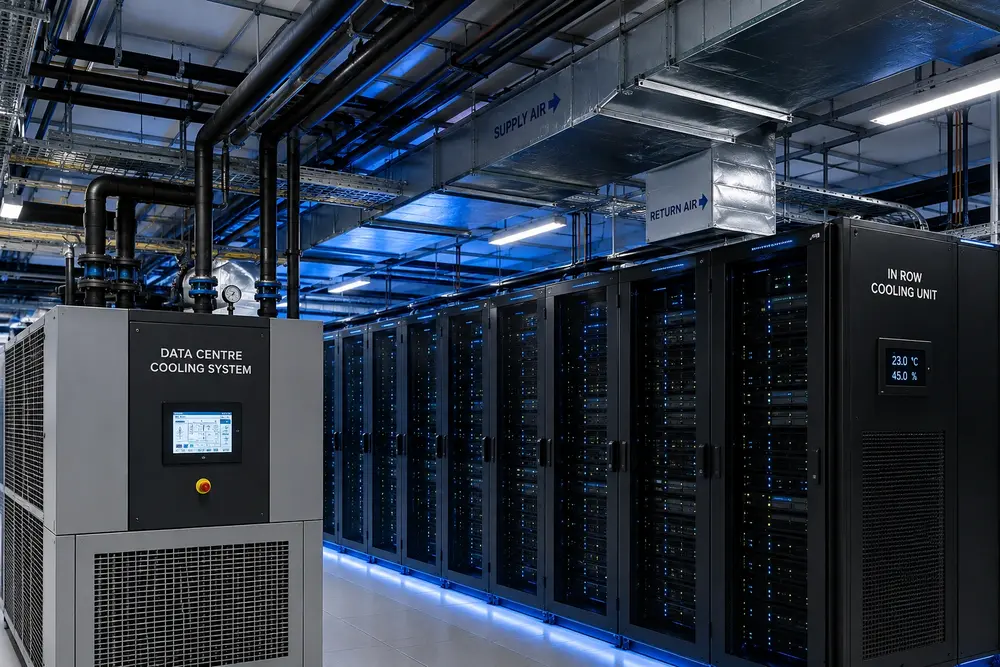
A dependable data centre cooling system protects your equipment, controls your energy costs, and keeps your operations running without interruption. As computing demands continue to grow, facilities that invest in the right cooling approach today will be better prepared for what comes next. Take time to assess your current setup and plan for the cooling capacity your facility will actually need.