
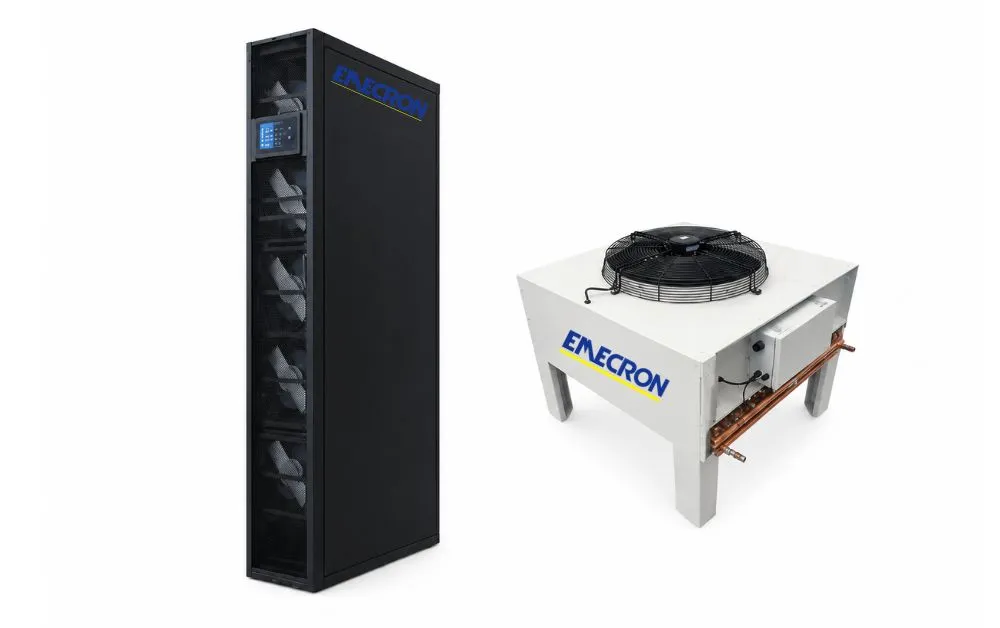
Data centres are getting hotter. As server densities increase, rack power levels rise, and compute workloads grow more demanding, traditional perimeter cooling approaches are struggling to keep up. The answer for a growing number of data centre operators is the in row cooling system — a targeted, efficient approach that delivers cooling directly where it is needed most, right at the heat source itself. This blog explains why in row cooling system technology is rapidly becoming the standard choice for modern, high-density data centre environments, and what advantages it offers over older cooling architectures.
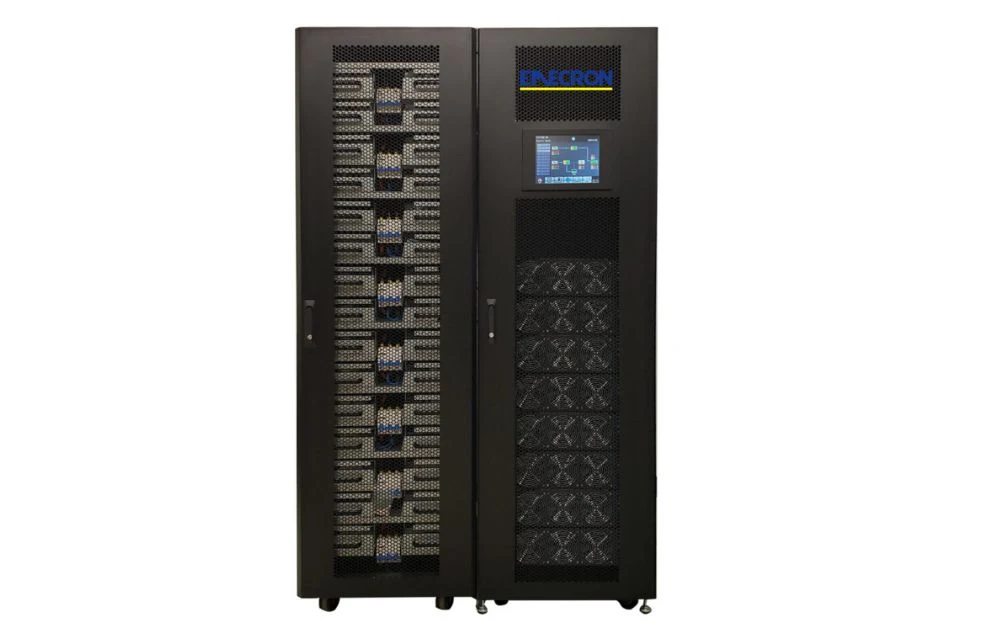
How Traditional Perimeter Cooling Works — and Why It Falls Short
The traditional approach to Data centre cooling system design relies on Computer Room Air Conditioners (CRACs) or Computer Room Air Handlers (CRAHs) positioned around the perimeter of the data hall. These units cool the room air, which then travels under a raised floor or through overhead distribution to reach server racks. Servers draw cool air in from the cold aisle at the front of the rack and exhaust hot air into the hot aisle at the rear.
This design worked well for data centres with modest rack power densities — typically below 5 kW per rack. But as modern servers now routinely push 10, 15, or even 20 kW per rack, the distance that cool air has to travel before reaching high-density racks means significant temperature rise along the way. Cold air mixes with hot exhaust air, reducing cooling efficiency, creating hot spots, and forcing the Data centre cooling system to work harder to maintain safe operating temperatures throughout the hall.
What Is an In Row Cooling System?
An in row cooling system is a cooling unit that is installed directly within the server rack rows — positioned between equipment racks rather than around the room perimeter. Instead of cooling the entire room, these units cool air locally, drawing hot exhaust air from the hot aisle immediately adjacent to the cooling unit and returning cooled air directly to the cold aisle of the same row. The result is a much shorter, more direct air path that eliminates mixing, reduces thermal losses, and delivers precisely controlled cooling exactly where the heat is being generated.
Key Advantages of In Row Cooling Systems
Higher Cooling Efficiency
Because an in row cooling system intercepts heat immediately at the source rather than after it has distributed throughout the room, it operates with much higher thermodynamic efficiency. Less energy is wasted cooling spaces that do not need cooling. Cooling units run fewer hours and consume less energy per kW of heat removed compared to perimeter systems. This translates directly into lower Power Usage Effectiveness (PUE) metrics — the key measure of energy efficiency in data centre operations.
Scalable to Any Rack Power Density
One of the defining challenges of modern data centre management is the unpredictable growth of rack power density as hardware refreshes occur. An in row cooling system scales simply — when a row gets denser or hotter, additional in-row units can be added within that row. This modular approach means cooling capacity can grow incrementally alongside IT load, without the need for expensive infrastructure overhauls.
Elimination of Hot Spots
Perimeter cooling systems are notoriously poor at eliminating hot spots — areas within the data hall where cooling air does not reach adequately due to airflow patterns, obstructions, or simply distance from cooling units. Precision cooling system for datacentre deployments using in-row units eliminate this problem by distributing cooling throughout the row structure rather than relying on room-wide air circulation.
Flexibility in Building Design
Traditional perimeter cooling depends on raised floors or dedicated overhead plenum for air distribution. In row cooling units can be deployed in facilities without raised floors, in retrofit situations where adding underfloor infrastructure is impractical, and in modular or prefabricated data centre designs. This flexibility makes in row cooling an excellent fit for edge data centres, colocation builds, and enterprise machine rooms in standard commercial buildings.
Suggested Read-Types of Data Centre Cooling Systems: In-Row, DX & Precision Cooling Explained
DX Type In Row Cooling for Data Centres
A dx type cooling system for datacentre uses direct expansion refrigerant technology to cool air within the in-row unit. DX systems are refrigerant-based: a compressor, condenser, expansion valve, and evaporator form a closed refrigerant circuit that transfers heat from the incoming hot air to a refrigerant that is then rejected outdoors via a condenser unit. DX-type in row cooling is popular for its self-contained operation — each unit manages its own refrigeration cycle independently, making it straightforward to install and commission in both new and existing data centres. This approach is particularly effective in environments where chilled water infrastructure is not available or is not cost-effective to install.
Comparison: In Row Cooling vs Traditional CRAC/CRAH Systems
For data centres operating at high rack densities above 10 kW per rack, an In row cooling system consistently outperforms traditional CRAC or CRAH approaches on energy efficiency, cooling precision, and scalability. Traditional systems work adequately at low densities but require significant oversizing and inefficient airflow management to handle modern high-density environments. The result is higher energy bills, more complex airflow containment engineering, and lower overall cooling reliability. In-row systems address all three of these pain points directly.
Ideal Applications for In Row Cooling
In row cooling is the right choice for high-density colocation racks where tenants are deploying AI compute, GPU clusters, or dense storage arrays. It is ideal for hyperscale and enterprise data centres refreshing their thermal infrastructure alongside hardware upgrades. It suits edge computing locations where space is limited and a full CRAC-based Data centre cooling system is neither practical nor justifiable. Financial services and healthcare data centres that run mission-critical applications with strict availability requirements also benefit significantly from the precision and reliability of in row cooling deployments.
What to Consider When Selecting an In Row Cooling System
When evaluating a Precision cooling system for datacentre deployment, consider the current and projected rack power density of each row, the available building infrastructure for condenser placement or chilled water supply, the monitoring and control integration capabilities of the in-row units, the serviceability of the units within the operational row, and the total cost of ownership including energy consumption, maintenance requirements, and refrigerant management.
Conclusion
As data centres continue to increase in density and thermal complexity, the in row cooling system has moved from a niche solution to a mainstream requirement. Its combination of precision, efficiency, scalability, and flexibility makes it the best available answer to the cooling challenges of modern data centre operations. Whether you are deploying a new data centre, upgrading existing cooling infrastructure, or managing a high-density Data centre cooling system that is struggling with hot spots, in row cooling technology — including dx type cooling system for datacentre and Precision cooling system for datacentre designs — delivers the performance and reliability your IT infrastructure demands.