
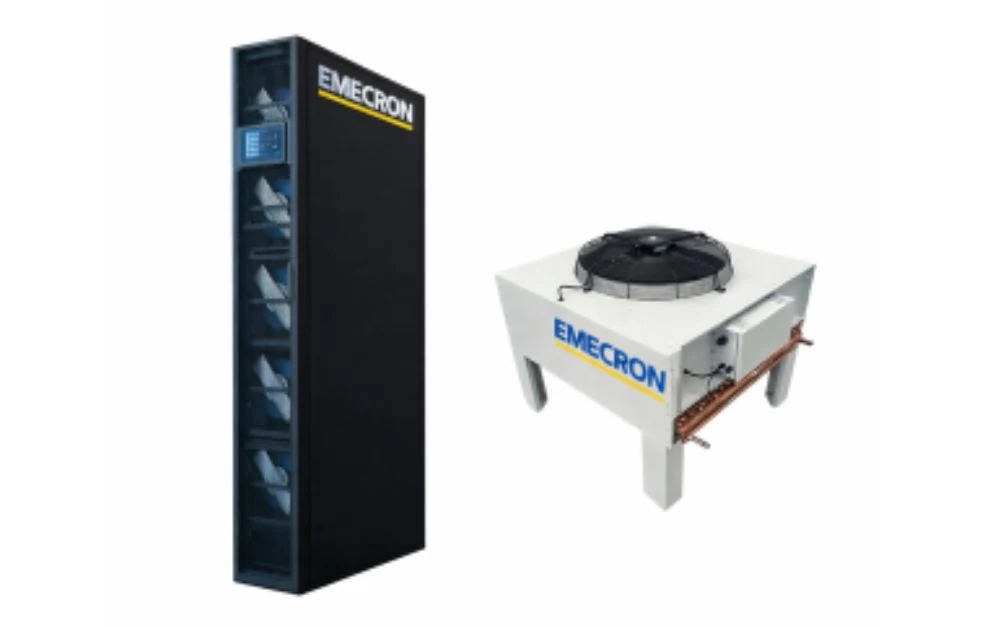
As server densities increase and data centres push ever higher levels of compute power into constrained physical footprints, cooling has become one of the most technically demanding aspects of data centre design and operations. Understanding the different Data centre cooling system methods available — including the dx type cooling system for datacentre, precision cooling system for datacentre architectures, and in-row cooling deployments — is essential for facility managers, IT infrastructure engineers, and anyone responsible for data centre thermal management.
Why Cooling Is Mission-Critical in Data Centres
IT equipment generates heat as a by-product of computation. Unmanaged heat accumulation causes component failure, reduces server longevity, and triggers thermal throttling that degrades computing performance. Data centre cooling systems must remove this heat efficiently, reliably, and continuously — 24 hours a day, 365 days a year — while consuming as little energy as possible to keep PUE (power usage effectiveness) ratios competitive.
DX Type Cooling System for Data Centres
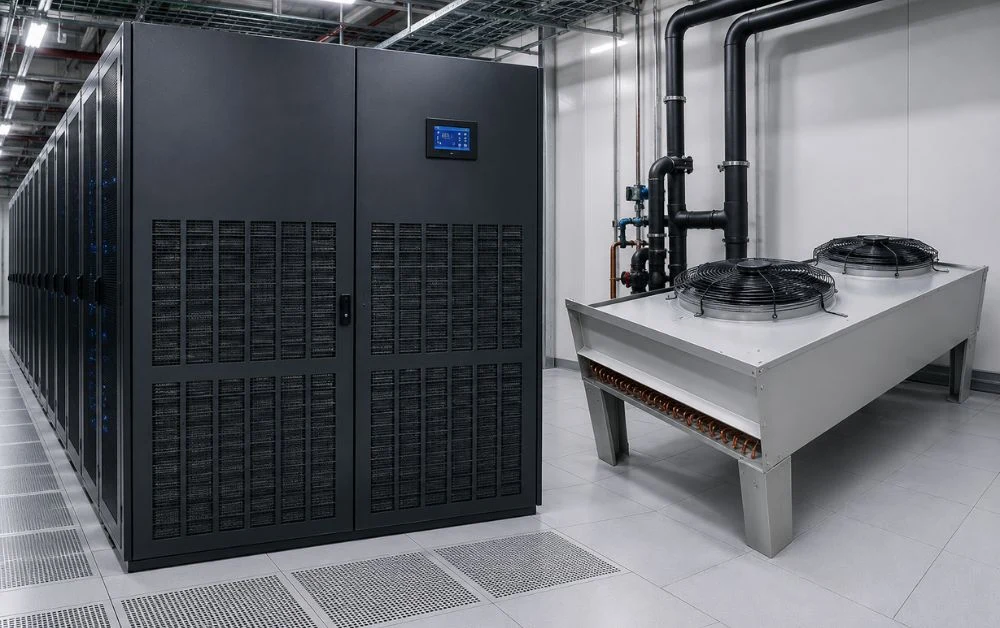
The dx type cooling system for datacentre — where DX stands for direct expansion — operates on the same refrigeration cycle principle as commercial air conditioning. A compressor circulates refrigerant that absorbs heat in the evaporator and rejects it in the condenser (typically air-cooled externally). DX systems are highly adaptable, available in a wide range of capacities, and do not require chilled water infrastructure — making them suitable for edge data centres, co-location facilities, and medium-scale deployments where a full chilled water plant would be overengineered or cost-prohibitive.
Modern DX precision air conditioning systems designed for data centres include features like precise temperature and humidity control (typically ±1°C and ±5% RH accuracy), EC fan technology for energy efficiency, hot-standby redundancy configurations, and integration with BMS platforms for remote monitoring and alarm management.
Precision Cooling System for Data Centres
A precision cooling system for datacentre environments differs from standard commercial HVAC in fundamental ways. While commercial air conditioning is designed for human comfort (variable occupancy, moderate heat loads, tolerant of temperature swings), precision air conditioning systems are engineered for the specific thermal characteristics of IT equipment: continuous high heat loads, sensitivity to humidity extremes, and the need for airflow management that supports hot aisle/cold aisle containment strategies.
Precision cooling systems — whether DX-based or chilled water — deliver tightly controlled supply air temperature and humidity, airflow volumes matched to server rack densities, N+1 or 2N redundancy configurations, and 24/7 operational monitoring with automated fault response. They are designed for continuous operation with maintenance intervals that do not require system shutdown.
In-Row Cooling Systems
In-row cooling systems are deployed directly within the server rack rows rather than at the perimeter of the data centre floor. Each in-row cooling unit draws hot exhaust air from the rear of adjacent server racks and delivers cool air directly to the front intake — dramatically reducing the distance air must travel and improving cooling efficiency in high-density deployments.
In-row cooling is particularly effective in environments where specific rack clusters operate at significantly higher densities than the general floor average — GPU compute clusters, high-frequency trading systems, and AI training infrastructure, for example. The targeted cooling approach minimizes energy waste and reduces hotspot risk.
Choosing the Right Cooling Strategy
The right data centre cooling method depends on several factors: the physical size and layout of the facility, server rack density (average kW per rack), geographic climate and available external heat rejection conditions, available budget for capital infrastructure vs operational costs, and plans for future density growth. Low-to-medium density deployments often begin with perimeter DX precision cooling and add in-row units as densities increase. Purpose-built, large-scale data centres typically specify chilled water plants with precision air handlers from the outset.
Future-Proofing Your Cooling Infrastructure
One of the most common and costly mistakes in data centre cooling design is under-specifying for future growth. Cooling systems that are appropriately sized for today’s rack densities may be completely inadequate within three to five years as compute density increases. Best practice in 2026 data centre design involves specifying cooling infrastructure with capacity headroom of 30 to 50% above current load, designing for straightforward capacity expansion (additional in-row units, chiller plant modules), and planning containment architecture from day one even if full containment is not implemented immediately.
Conclusion
Whether you are specifying a dx type cooling system for datacentre operations, deploying a precision cooling system for datacentre environments, or implementing in-row cooling for high-density compute clusters, the fundamental requirement is the same: reliable, efficient, and precisely controlled thermal management that protects your IT investment and supports continuous availability.